When the immune system slowly turns down the thyroid in Hashimoto's Disease
Hashimoto's Disease and Treatment Options
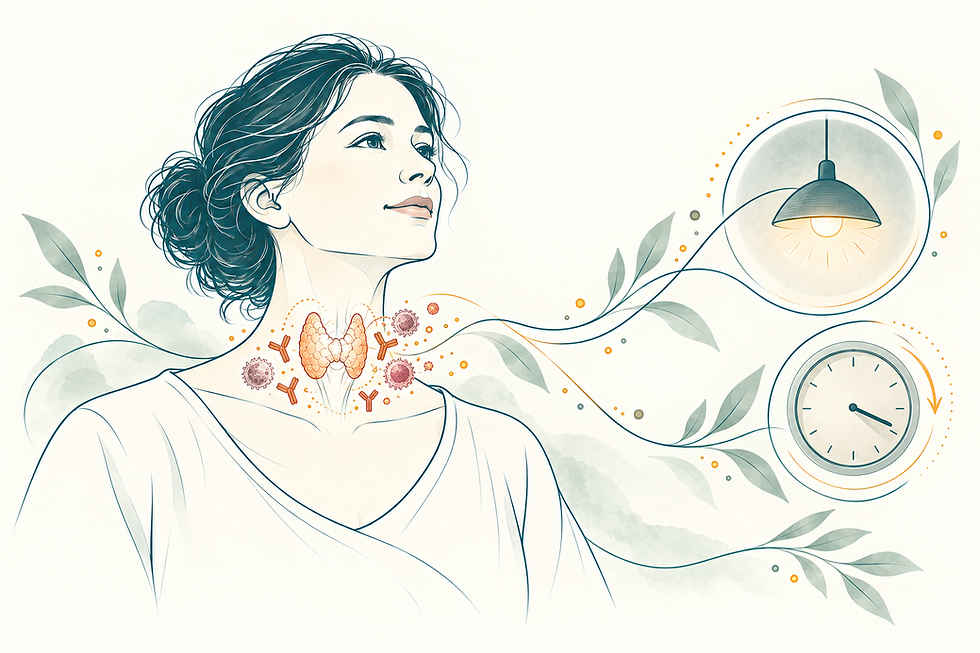
Hashimoto’s disease is an autoimmune condition in which the immune system gradually damages the thyroid gland. It is also called Hashimoto’s thyroiditis or autoimmune thyroiditis and is the most common cause of an underactive thyroid.
The thyroid is a small gland in the neck, but its hormones influence almost every part of the body. They help regulate energy, temperature, digestion, heart rate, periods, muscles and mental alertness. When thyroid hormone production falls, the entire system can begin to feel as though someone has quietly turned down the dimmer switch.
Symptoms may include:
-
Tiredness or reduced stamina
-
Feeling unusually cold
-
Dry skin or thinning hair
-
Constipation
-
Poor concentration or slowed thinking
-
Muscle aches
-
Heavier or irregular periods
-
Low mood
-
Modest weight gain
These symptoms are important, but they are not unique to thyroid disease. Iron deficiency, menopause, poor sleep, medication effects and several other conditions can produce a remarkably similar collection. Blood tests therefore remain essential.
What do thyroid antibodies mean
Most people with Hashimoto’s disease have thyroid peroxidase antibodies, usually called TPO antibodies. These help identify the autoimmune cause—but they do not tell us exactly how well the thyroid is functioning.
Some people have positive antibodies while their thyroid hormone production remains completely normal. They may not need treatment, although their thyroid function should be monitored.
The important distinction is:
-
Thyroid antibodies tell us why the gland may be vulnerable
-
TSH and free T4 tell us how well it is working now
Repeatedly measuring the antibody level is rarely helpful. A falling antibody number does not necessarily mean that the thyroid is recovering, and a rising number does not automatically mean that treatment should change. Antibodies are more like a fingerprint than a fuel gauge.
When is treatment needed
If Hashimoto’s disease has caused clear hypothyroidism—usually a raised TSH accompanied by a low free T4—treatment with levothyroxine is generally recommended. Levothyroxine replaces the T4 that the thyroid can no longer produce adequately.
When TSH is only mildly raised and free T4 remains normal, the decision is more individual. The result may first need confirming. Symptoms, age, antibody status, pregnancy plans, heart health and the degree of TSH elevation all help determine whether monitoring or a trial of treatment is more appropriate. Positive antibodies alone do not automatically require levothyroxine.
Pregnancy needs a more proactive plan
Thyroid hormone requirements often increase early in pregnancy. Anyone taking levothyroxine should ideally have thyroid function checked before conception and contact their clinical team promptly after a positive pregnancy test. Women with positive TPO antibodies but normal thyroid function may not require medication, but they usually need closer monitoring during pregnancy and after delivery.
Understanding the full story
Hashimoto’s disease is usually gradual, manageable and far less mysterious once the relationship between antibodies, TSH and thyroid hormone is understood.
The detailed guide explains:
-
Why the immune system targets the thyroid
-
How TSH rises before free T4 falls
-
When levothyroxine should be considered
-
How to take levothyroxine reliably
-
Hashimoto’s disease and pregnancy
-
Gluten, selenium, vitamin D and iodine
-
When an ultrasound or further assessment may be needed