Synacthen Test
Synacthen Test - checking whether the adrenal glands can rise to the occasion
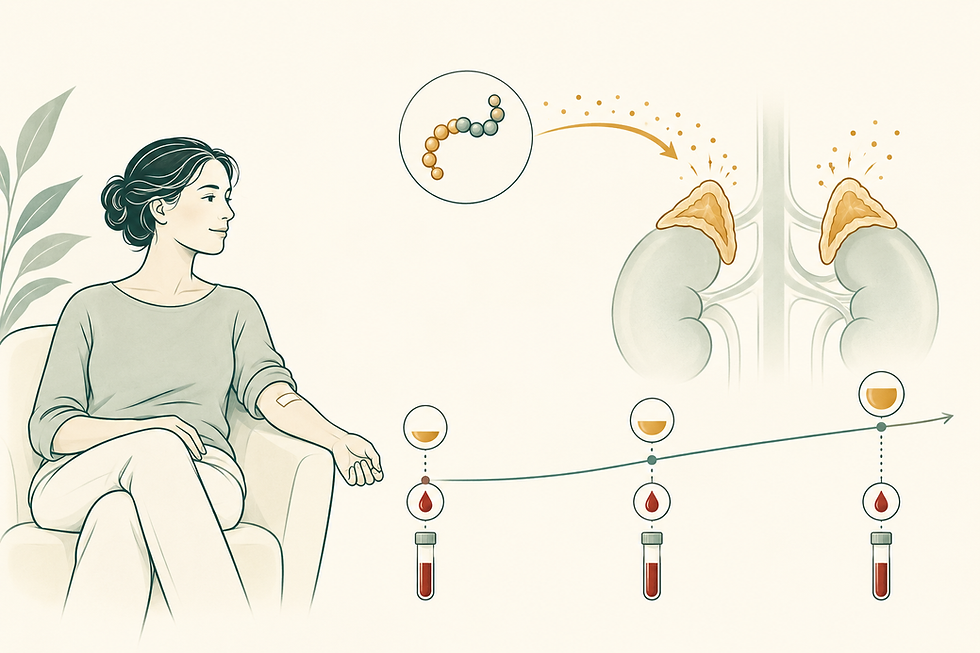
The short Synacthen test checks whether the adrenal glands can produce enough cortisol when stimulated.
Most hormone tests are a bit like taking a photograph: a single snapshot of what was happening at that moment. The short Synacthen test is different. It is more like gently ringing the adrenal gland's doorbell and watching whether it answers.
The adrenal glands sit above the kidneys and make several important hormones. One of the most important is cortisol. Cortisol helps the body cope with illness, infection, injury, fasting, surgery and everyday physiological stress. It is not simply a stress hormone in the dramatic sense. It is more like the body's morning start button, blood pressure support system and emergency reserve battery rolled into one. A short Synacthen test is used when we need to know whether your adrenal glands can make enough cortisol when asked.
Why would someone need this test?
The test is usually considered when symptoms or blood results raise the possibility of adrenal insufficiency. This means the body may not be making enough cortisol.
Possible clues include unusual tiredness, dizziness, weight loss, low blood pressure, nausea, low sodium, high potassium, darkening of the skin in some cases, or feeling disproportionately unwell after infections. Sometimes the question arises after long term steroid treatment, pituitary disease, adrenal disease, or after other investigations.
The difficulty is that many of these symptoms are common and can come from several causes. The adrenal glands rarely wave a little flag saying, “It is me.” The short Synacthen test helps separate suspicion from evidence.
What does Synacthen do?
Synacthen is a synthetic form of ACTH, the hormone normally released by the pituitary gland to tell the adrenal glands to produce cortisol.
In the test, a baseline cortisol blood sample is taken. Synacthen is then given, usually as an injection. Further blood samples are taken after a set time, commonly around 30 minutes and sometimes 60 minutes depending on the local protocol.
If the adrenal glands are healthy and have enough reserve, cortisol should rise appropriately. If the response is poor, that suggests adrenal insufficiency.
What happens on the day?
The test is usually done in the morning. You may be asked about steroid tablets, inhalers, creams, injections or recent illness, because these can affect interpretation.
The usual sequence is:
-
baseline blood sample
-
Synacthen injection
-
repeat cortisol sample after the agreed interval
-
sometimes an additional sample depending on local practice
Most people tolerate the test well. It is not designed to make you feel unwell. Some may notice brief flushing, mild nausea or a strange sensation after the injection, but significant reactions are uncommon.
What do the results mean?
A good cortisol rise is reassuring. It suggests that the adrenal glands can respond when stimulated.
A low or inadequate rise suggests adrenal insufficiency, but the next question is why. The issue may be in the adrenal glands themselves, known as primary adrenal insufficiency, or in the pituitary or hypothalamus signalling system, known as secondary or tertiary adrenal insufficiency.
This is why ACTH, renin, aldosterone, electrolytes, steroid history and pituitary context may all matter. The number is important, but the story around the number is just as important.
Why this test matters
Missing adrenal insufficiency can be dangerous, especially during illness or surgery, when the body needs extra cortisol. But diagnosing it incorrectly can also lead to unnecessary long term steroid treatment.
The short Synacthen test helps answer a very practical question: does your body have enough adrenal reserve to cope safely?
Key takeaway
The short Synacthen test is a controlled way of asking the adrenal glands to prove their cortisol reserve. It is not just about one blood result; it is about whether the body can respond when life demands more from it.
References